Can face detection be hacked like in the movies?
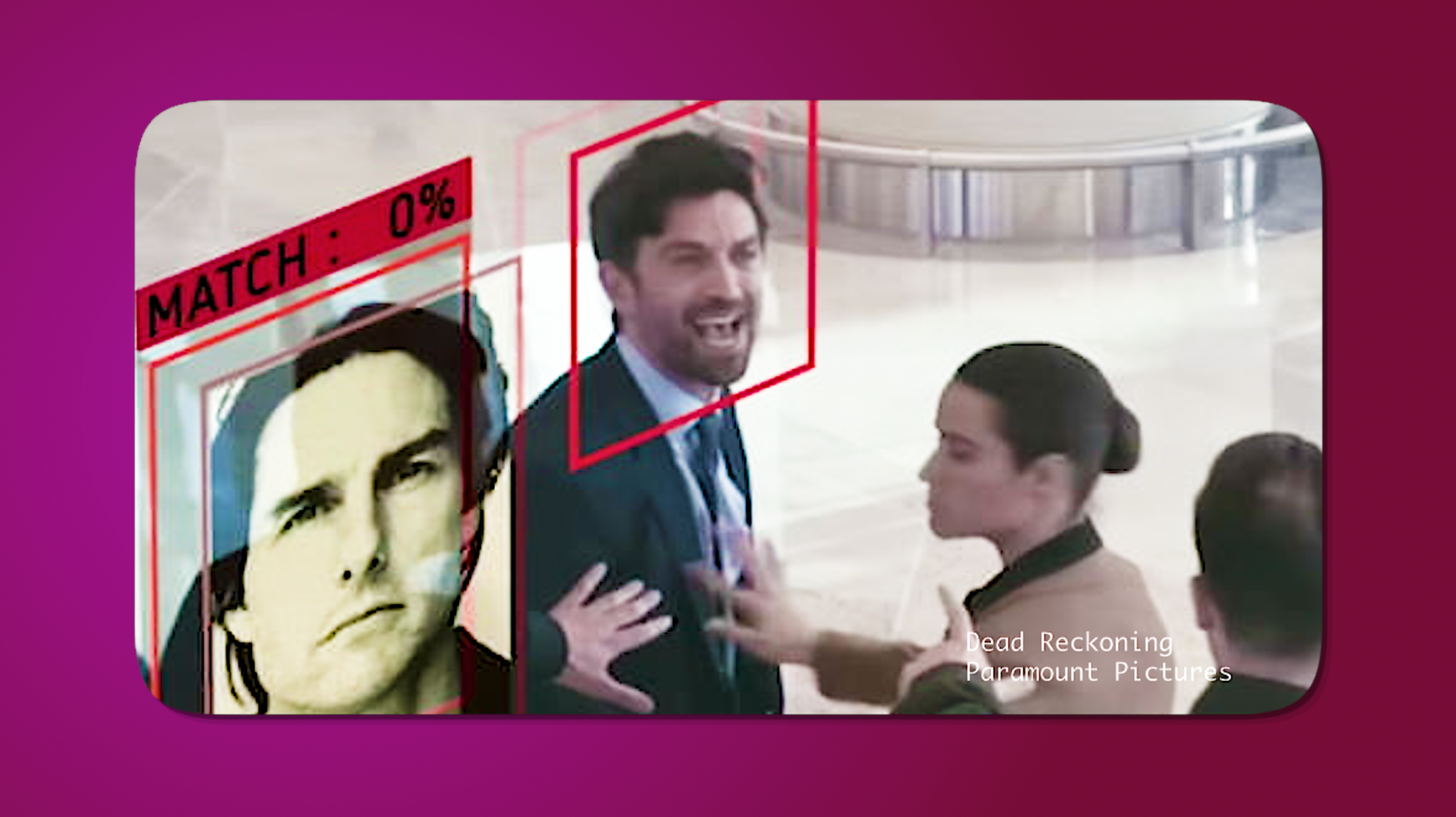
Facial recognition hack scene from Dead Reckoning Part One. Image: Paramount Pictures
BY KERRY TOMLINSON, AMPYX NEWS
In the movies, people evading law enforcement can hack into facial detection systems and put their face onto someone else.
That's what actor Tom Cruise and his team did in the movie Dead Reckoning Part One.
But can we do this same kind of hack in real life? A researcher tries his hand at it with fascinating results.
Watch here:
The Challenge
On the streets of London, facial recognition cameras in a police van spot a convicted child sex offender walking with a six-year-old girl. He's arrested for violating the terms of his release, which include not being alone with a child under 14.
Police see that as a win for facial detection. But can the system be tricked? Not masks or glasses that claim to disrupt the facial recognition, but changing faces entirely, so law enforcement sees a completely different person?
"This is something that I never thought was possible," said Jake Moore with security company ESET.
Moore ran an experiment to see how reliable facial recognition systems really are.
"If we're putting this much faith into it, I wanted to know if it's possible to, well, hack it," Moore told Ampyx News in an interview.
Test One
A busy train station in London allowed Moore to put up his own surveillance camera with the same software that police in the U.K. use for facial detection.
The first test: he put himself on the watch list, telling the detection system to watch out for his face.
Then he walked through the station. The system lit up.
"It pops up red," Moore said. "You could have it say if they're known for weapons, or whatever, it would come up next to them. So, to approach them with caution."
A guard pulled Moore aside.
"I was smiling with him. I had to comply. I don't want to get a punch in the face," Moore said. "I just went, 'Yes, of course. I'm ever so sorry. What seems to be the problem?' Very British of me, of course. But it kept in the right way that it should do, and I knew that was being filmed, so I didn't do anything silly."
Test One? Passed.
Test Two
Now, the most important part of the experiment.
Moore sent the surveillance camera feed through live face-swapping technology, telling it to put actor Tom Cruise's face on top of his.
"I chose Tom Cruise's face being like I was in the movies," Moore explained. "Every time it sees me, stick his face on top."
Will it work?
The Results
Moore headed back to the floor.
"I walk through the train station. It puts Tom Cruise's face on mine," he said. "That feed is run through the facial recognition software, which is looking for my face, not Tom Cruise, of course, and then it doesn't find me."
The system made a detection: not Moore, but Tom Cruise.
If you were looking for Moore with artificial intelligence only, he could have slipped through your fingers, like Tom Cruise in the movie Dead Reckoning.
Test Two is a success for Moore, but possibly also for others who would want to hack the system.
However, the odds of criminals doing this kind of attack right now are very low, according to Moore.
"Very, very unlikely going to be happening," Moore said. "Of course, every year this technology improves. I don't know where we're going to be in a few years with this kind of thing."
Analysis
For now, Moore wants to highlight the dangers of technology that doesn't work 100% of the time.
In one case, a Tennessee woman spent five months in jail after facial recognition identified her as a suspect in bank fraud cases in North Dakota.
She was finally set free when she showed evidence that she was nowhere near North Dakota at the time of the crimes.
Fargo police admitted they made an error and relied on a neighboring department's unapproved facial recognition technology instead of fully working the case themselves.
"We understand that this situation has caused a lot of concern," said Fargo Police Chief Dave Zibolski at a livestreamed press conference. "We're happy to acknowledge when we make errors. And we made a few in this case, for sure."
Conclusion
It's important to keep humans in the loop when using facial recognition results, Moore recommended, instead of relying completely on AI.
Some police departments say they always have humans analyze facial detection results, such as the Metropolitan Police in London who caught the child sex offender walking with a six-year-old girl.
"We do need to be using these pieces of software with huge amounts of caution, a pinch of salt, before we go and say bash down a door or arrest someone without taking into consideration the human brain as well," Moore added.
ALSO IN THE NEWS: