Need tech support? Watch out for this scam
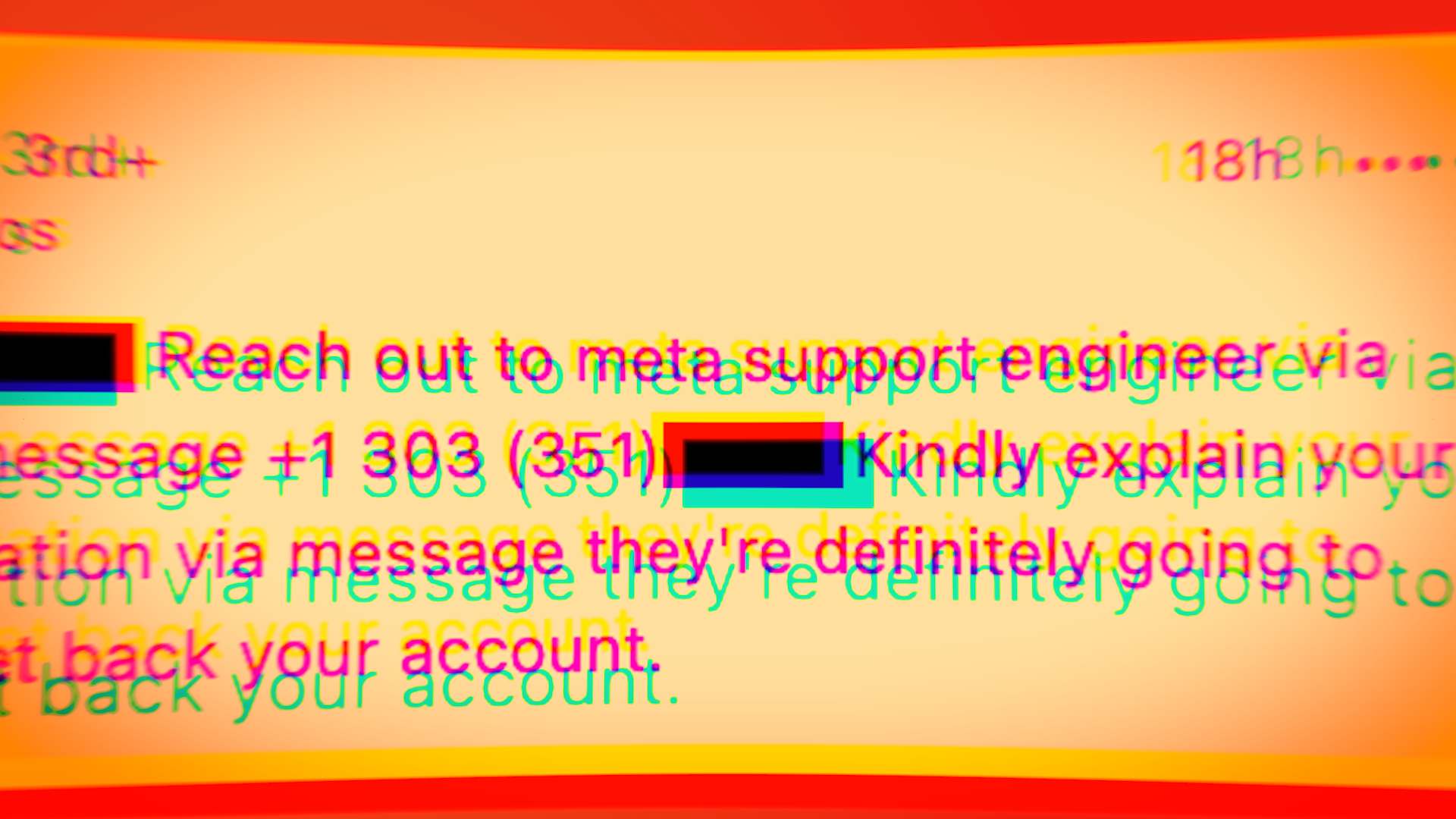
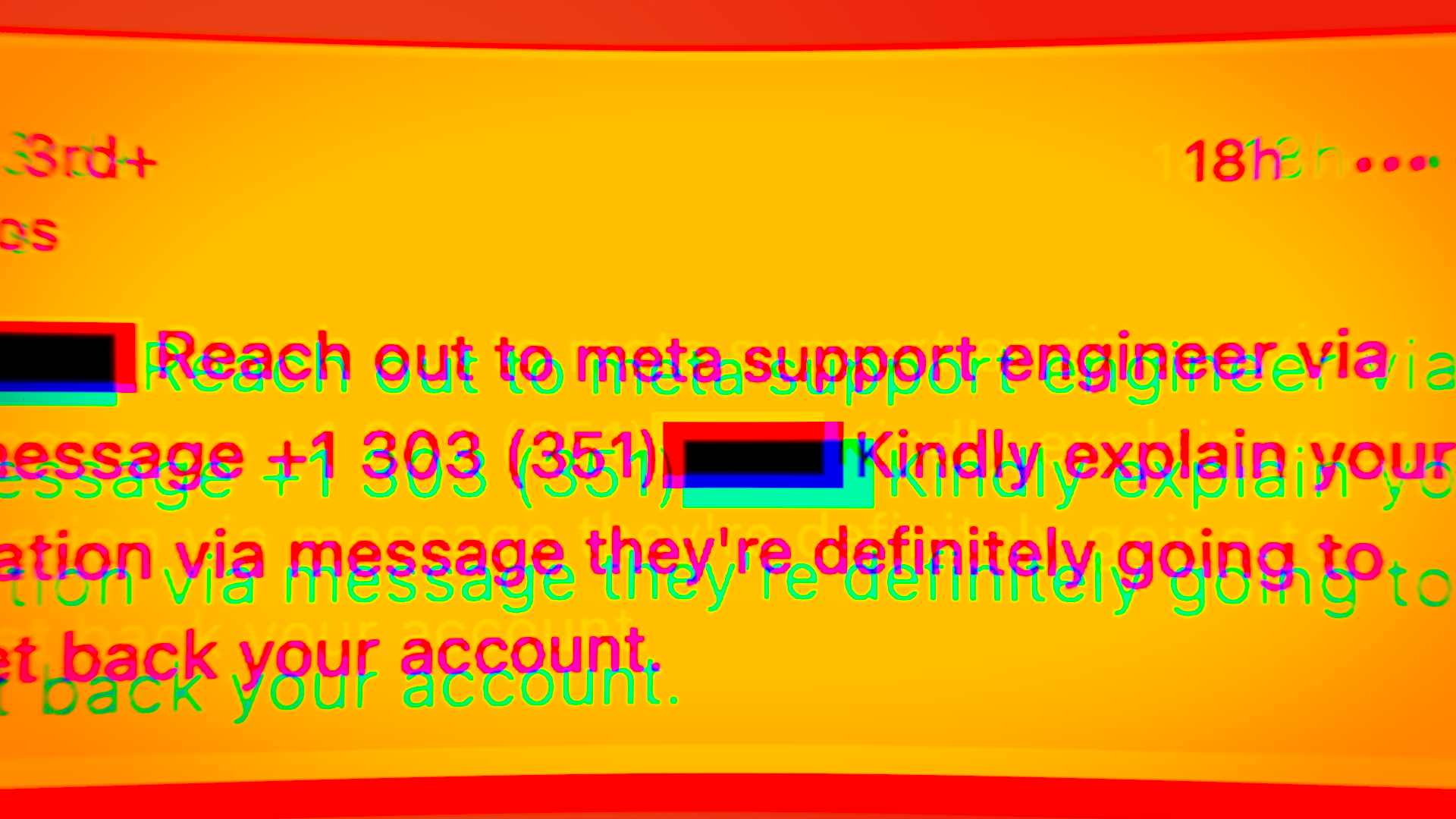
Tech support scam message on LinkedIn. Image: Ampyx News
BY KERRY TOMLINSON, AMPYX NEWS
Everything is connected now. That means more technology and more tech support. And that's where the criminals come in.
Tech support scammers have found an easy way to trick us out of money. They just wait for us to ask for help. We show you their tactics from the inside.
WATCH HERE:
Not my post, not my dad
The post appeared on Elizabeth Tirkas' Facebook page. Her dad was sick, and needed to sell off expensive items for cheap, like a Jeep, and a Peloton. Friends took her up on the offer.
But it was all a scam. Someone hacked her page, made the fake post, and took in money from her friends. Tirkas herself was locked out of both her Facebook page and her Instagram account.
"Oh, it felt awful," she said in an interview. "I felt terrible for people that were being frauded."
Looking for help
Horrified, she and others reported the scam to parent company Meta but got this disheartening response.
"'No, this doesn't violate the terms,'" she recounted. "Well, it does if it's not me, and they're stealing money from people."
Despite hours of research, reporting and contacts, Meta did not respond beyond the automated messages.
Tirkas had her account for more than 20 years, connecting with hundreds of friends around the world, creating a community, announcing local events, and using it as a digital journal of her life.
"I felt sad. I felt kind of like a piece of me had been ripped out," she said. "As the sentimental person that I am, the record is gone."
Last chance?
In desperation, she tried one more thing.
On a Meta LinkedIn post, she placed a comment, joining many others like her asking for help.
She finally got an answer. A man named Kevin Brett replied to her comment and told her to call a Meta support engineer. He provided a number to call.
"Hey, this person can help," Tirkas thought at first. "Here's a phone number."
The investigation begins
Could she really get her accounts back?
We go undercover to find out. We call and get Kevin Brett himself.
"I'm Kevin Brett. I'm the cyber tech guy who is supposed to be helping you out," he tells us by phone.
"I am currently based in Atlanta, okay," he adds. "Our colleague, who also based in Atlanta, work directly with Meta."
We tell him our Instagram account is hacked and we can't get in.
"I can be able to get your account back to in the next 50 to 70 minutes," he replies.
Fake or real?
But this Kevin Brett, whose LinkedIn profile shows his company as Atos, is fake.
Thieves stole the picture from a real Kevin Brett who works at a law firm in Seattle. And now they're trying to steal from us.
Fake Kevin sends us a video claiming it shows him recovering our account.
"You're my top priority and I want you to recommend my services to others who might be facing the same issues," he says.
Those services will cost us $111, payable by Venmo, a cash app.
"It's high enough where people think it could be a real service, if they're good at doing it and can get it done quickly, but it's low enough that the average person can pay it," Tirkas said.
More details
We ask Fake Kevin for the name and address of his company. He resists, but finally sends us information for an Atlanta company, Asteros on West Wieuca Road Northeast.
If you check out the Asteros address he sent, you'll find it's a post box at an office services business. But if you check out the website and send a contact message, you'll meet the real owner of this real cybersecurity company, Zach Varnell.
"It was weird that it was my small company that was caught up in this," Varnell said in an interview. "I knew this happened, but I didn't know it would happen to me."
This fake Kevin Brett has nothing to do with the real Asteros, Varnell said.
"We're a pretty small company, so I would have assumed they would have chosen somebody bigger," he added. "I wouldn't be surprised if the guy had Googled it right there in the middle of your conversation and just said whatever popped up on his screen."
Trust in Me
"I can assure you I am a trustworthy individual," Fake Kevin says. "So, I advise you, make the payment to the Venmo I sent you so I can be able to prove that to you."
He explains that the $111 does not go to him, but instead to Meta for the special login code that will allow us to unlock our account. The code will be revealed when we make the payment. No refund if it doesn't work.
We know there is no code. We tell him we think he's not really in Atlanta.
"Ma'am, I'm just trying to get your account recovered, okay? We don't do scams on our server," Fake Kevin counters. "We've been recommended by most individuals in the United States and world-wide, okay?"
"It sounded like he was probably reading a script and didn't know what to do when you asked any questions that weren't answered right in front of him," Varnell said. "It doesn't seem like he was quick on his feet to be able to come up with answers in the moment."
Scam Tricks
But even low-level tech support scammers can and do succeed, using psychology to manipulate desperate people.
Fake Kevin calls again the next day.
"I was up, like, throughout the night working on this issue of yours," he says plaintively. "I've invested a lot of time and a lot of waiting on this account of yours."
"They're preying on your psychological goodness," Tirkas said. "'Oh, this person works so hard, they should be paid for their time.'"
No Faith
Fake Kevin also focuses on trust, trying to make us feel guilty for not putting faith in him.
"I was very, very upset about you not trusting me and getting the proof so that I can be able to get the process completed for you," he says. "I do work with trust and honesty and there's no way I can be able to assist you without you trusting me."
"They're getting smarter in the sense of how to manipulate people," Tirkas said.
Flood of Fakes
The Fake Kevins on LinkedIn aren't just going after Elizabeth Tirkas.
As people beg Meta for help, the fraudulent profiles post comment after comment, promising help that will never come.
Where is Meta in all this?
We contacted their media department five times over the course of the investigation but received zero response.
It feels like we're on our own.
"I'm upset that a company that has what, three billion users, doesn't have customer support," Tirkas said. "There's people that know the company isn't doing a job and so they're 'meeting the need' and then they know they're able to take advantage of people."
Protect yourself
Tirkas did not fall for the support scam, despite her desperation. But she reminds us to:
Use strong passwords.
Use different passwords on every account.
Back up our important data.
We'll add:
Use passkeys whenever possible, as well as
Add multi-factor authentication to your accounts, that extra login step like a code from your phone or an app
Also, check out a business first, before you interact with them, Varnell recommended.
Before the digital age, con artists would steal other people's business cards and hand them out later for credibility, as illustrated in the movie Chinatown. Actor Jack Nicholson plays a slick trickster who grabs a card from an official's office and uses it to enter a restricted zone.
"It seems like they're doing the modern version of that," Varnell said. "You get handed a business card, you don't think, 'Is this really the person in front of me?' You just assume it is."
Final chapter
After 12 calls from Fake Kevin, it's almost over.
We reported his fake profile. But law enforcement can do little to arrest criminals outside the country, especially those stealing smaller amounts of money.
However, we gained ground on the thieves, exposing their tactics, disrupting their scam infrastructure, and using up time they would otherwise spend scamming other people.
Fake refuses to break character and admit it's fraud. We decide to continue posing as his target until he gives up in frustration.
The LAST conversation
Here are highlights of our last words with ‘Mr. Brett.’
Fake Kevin: "Hi. Hi. I'm here."
Ampyx News: "I don't think I'm going to do it."
Fake Kevin: "Honestly? Like, seriously?"
Ampyx News: "You sound kind of desperate."
Fake Kevin: "No, I'm desperate about the funds, okay? I'm desperate about getting your trust."
Ampyx News: "Well, it just kind of feels like s scam."
Fake Kevin: "Yeah, I don't know… I don't know why… how you think… I can assure you this is not a scam."
Ampyx News: "Well, can't you just get another customer?"
Fake Kevin: "Okay, the… me getting other customer is not the issue, ma'am. It's me getting yours fees, okay?
You're having a lot of trust issues with me since yesterday.
I know you're just a trust issue and… it's over, okay?"
(Hangs up)
No money from us, but the pressure, manipulation, and constant calls would wear some victims down.
"They figured out the psychology behind it," Tirkas said. "I'm sure that there's some people making quite a bit of money off of this."
FINAL NOTES
A lot has happened since we first interviewed Elizabeth Tirkas. She never got her Facebook account back, but after a long struggle and finally paying for Meta Verified, she was able to recover her Instagram.
Meta created a scam help center to assist people reporting hacked accounts and dealing with fraud. But there are still many complaints online from people unable to get help from Meta for hacked or locked accounts, and there are still many thieves replying with fake help and false hope.
We notified LinkedIn about Fake Kevin and the platform shut his account down. New fake Kevin Brett profiles appeared, and those were shut down, too. However, at last check, a new fake Kevin Brett profile has emerged, using a different stolen picture of a different real person named Kevin Brett. The new Fake Kevin is replying once again to comments with tales of quick assistance and rescued accounts.
"After being taken advantage of the first time, you're more likely to be at risk to be taken advantage of a second time," Tirkas said. "Don't be too trusting of people that are offering services to help.”
ALSO IN THE NEWS: